
 WiFi Router Antenna
Antenna Polarization: What It Is and Why It Matters
Estimated reading time: 15 minutes
Every electronics engineer knows antennas transmit and receive signals in the form of electromagnetic waves (electromagnetic energy waves), whose properties can be described by Maxwell’s equations. Like many specialized technical subjects, we can interpret these equations, along with the propagation rules and characteristics of electromagnetic waves, from multiple dimensions—ranging from relatively straightforward qualitative descriptions to complex, intricate mathematical formulas.
Polarization is one of numerous characteristics of electromagnetic energy propagation. Its impacts and the degree to which it needs to be considered vary widely across different application scenarios and corresponding antenna designs. The fundamental principles of polarization apply to all electromagnetic radiation, including radio frequency (RF)/wireless signals and lightwave energy, and polarization sees extensive use in the field of optics. This article only covers the RF frequency band.
What Is Antenna Polarization?
To understand polarization, one must first master the basics of electromagnetic waves. An electromagnetic wave consists of an electric field (E-field) and a magnetic field (H-field) traveling in the same direction. The electric field and magnetic field are perpendicular to each other, and both are perpendicular to the propagation direction of the plane wave.
Polarization is defined as the vibration plane of the electric field when observing from the transmitting end toward the direction of wave travel. Under horizontal polarization, the electric field oscillates side-to-side within the horizontal plane; under vertical polarization, the electric field vibrates up and down within the vertical plane (see Figure 1).
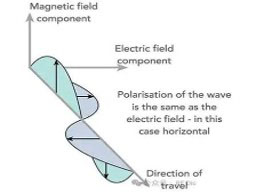
Figure 1: Electromagnetic wave with mutually perpendicular electric and magnetic field components
Transmit and receive antennas form an antenna pair, and transceiver performance reaches its peak when the two share identical polarization planes. As a nod to the iconic line from the 1979 film Alien—“In space, no one can hear you scream”—there is no inherent distinction between horizontal and vertical polarization in outer space. Even so, the theories of polarization matching and antenna alignment still hold true for maximizing signal energy transmission and reception.
Linear and Circular Polarization
Electromagnetic waves feature multiple polarization modes:
- Basic linear polarization includes two mutually orthogonal (perpendicular) polarization forms (see Figure 2). Theoretically, a horizontally polarized receive antenna cannot capture any signal emitted by a vertically polarized transmit antenna operating at the same frequency, and vice versa. The closer the polarization orientations of the two antennas, the stronger the received signal; signal energy transfer efficiency peaks when polarization is perfectly matched.
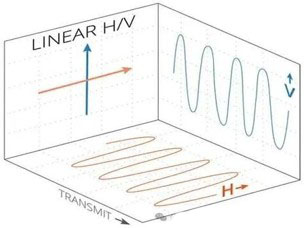
Figure 2: Linear polarization offers two mutually orthogonal polarization forms
- Slant polarization is a variant of linear polarization. Like standard horizontal and vertical polarization, this definition only applies to ground-based scenarios. Slant polarization forms a ±45° angle relative to the horizontal plane. While slant polarization is fundamentally linear, when industry professionals reference “linear polarization,” they usually mean solely horizontal or vertical polarization antennas.
- Signals emitted or received by slant polarization antennas can be picked up by purely horizontally or vertically polarized antennas, albeit with a certain amount of signal loss. Slant polarization antennas are ideal for use cases where the polarization state of one or both antennas is unknown, or polarization shifts during operation.
- Circular polarization (CP) is more complex than linear polarization. In this polarization mode, the electric field vector continuously rotates as the signal propagates. When viewed outward from the transmitting end, clockwise rotation of the electric field vector is called Right-Hand Circular Polarization (RHCP); counterclockwise rotation is Left-Hand Circular Polarization (LHCP) (see Figure 3).
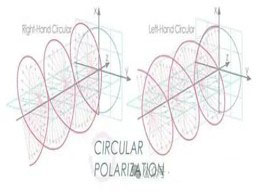
Figure 3: The electric field vector of circularly polarized electromagnetic waves rotates, split into right-hand and left-hand types
Circularly polarized signals are formed by superposing two orthogonal electromagnetic waves with a 90° phase offset. Three criteria must be satisfied to generate circular polarization: the electric field must contain two orthogonal components; the two components must have a 90° phase difference; and both components must carry equal amplitude. Helical antennas provide a simple solution for generating circularly polarized waves.
- Elliptical polarization (EP) is a derivative of circular polarization. Like circularly polarized waves, elliptically polarized waves are synthesized from two linearly polarized waves. Elliptical polarization forms when two mutually perpendicular linearly polarized waves of unequal amplitude are superimposed.
The degree of polarization mismatch between two antennas is quantified by the Polarization Loss Factor (PLF), measured in decibels (dB). Its value is determined by the polarization angle between the transmit and receive antennas. Theoretically, PLF equals 0 dB under perfect polarization matching (zero loss); if the two antennas are fully orthogonally polarized, PLF approaches infinity (complete signal attenuation).
In real-world applications, however, antennas cannot achieve perfectly matched or fully orthogonal polarization. Mechanical installation misalignment, human operation errors, channel distortion, multipath reflections and other factors all introduce angular deflection to the polarization direction of the transmitted electric field. Even if two antennas are designed for orthogonal polarization, cross-polarization leakage of 10 to 30 dB or higher still occurs in practice. In some scenarios, this leaked signal is strong enough to interfere with demodulation of the desired signal.
Conversely, even with ideal polarization and precise alignment of two antennas, real-world environmental factors may push PLF to 10 dB, 20 dB or higher, degrading signal reception. Simply put, unintended cross-polarization and high polarization loss factors produce two adverse effects: they introduce interfering signals and attenuate the strength of the target useful signal.
Why Polarization Characteristics Matter
Polarization follows a bidirectional rule: the more closely aligned and consistent the polarization types of two antennas, the higher the received signal strength. On the contrary, poor polarization matching makes it difficult for both target receivers and interference receivers to capture sufficient usable signals. In most scenarios, the wireless channel alters the polarization state of the transmitted signal, or one or both transceivers cannot maintain a fixed, stationary antenna orientation.
The choice of polarization mode is generally determined by installation environment and atmospheric propagation conditions. For example, horizontally polarized antennas deliver better signal performance and more stable polarization when mounted near ceilings; by contrast, vertically polarized antennas installed against side walls exhibit polarization behavior closer to their nominal design specifications.
Common dipole antennas (standard dipoles / folded dipoles) operate in horizontal polarization under conventional mounting (see Figure 4). If required to fit a specific polarization mode, the antenna can be rotated 90° to switch to vertical polarization (see Figure 5).
SHAPE \* MERGEFORMAT
Figure 4: Dipole antennas are typically mounted horizontally on masts for horizontal polarization
SHAPE \* MERGEFORMAT
Figure 5: Dipole antennas can be installed vertically on masts for vertical polarization when required by the application
Vertical polarization is widely used in handheld walkie-talkies, such as devices carried by emergency rescue personnel. This is because most vertically polarized radio antennas feature omnidirectional radiation patterns—meaning users do not need to readjust antenna azimuth even as the handheld device’s orientation constantly shifts.
Most antennas operating in the High Frequency (HF) band of 3–30 MHz adopt simple longwire antenna structures strung horizontally between supports. Their large physical size is dictated by the corresponding wavelength (10–100 meters), and such antennas are inherently horizontally polarized.
Curiously, the band was named “High Frequency” decades ago when 30 MHz qualified as a high frequency range. Though the label seems outdated today, it remains the official band designation defined by the International Telecommunication Union (ITU) and is still universally used.
The Medium Wave (MW) band spans 300 kHz to 3 MHz. The polarization selected by broadcast stations in this band depends on whether the station relies on ground waves for short-range strong signal coverage or ionospheric skywaves for long-distance transmission. Overall, vertically polarized antennas deliver superior ground wave propagation, while horizontally polarized antennas are better suited for skywave communications.
Satellite communications rely heavily on circular polarization. Satellites constantly shift their attitude relative to ground stations and other satellites. Signal transmission efficiency peaks when both transmit and receive ends deploy circularly polarized antennas; pairing linearly polarized antennas with circularly polarized antennas works but introduces measurable polarization loss factor.
Polarization characteristics are equally critical for 5G systems. Certain 5G Multiple-Input Multiple-Output (MIMO) antenna arrays leverage polarization technology to utilize spectrum resources more efficiently, boosting throughput speeds. This is achieved by combining different polarization modes of signals with antenna spatial multiplexing (spatial diversity). Such systems transmit two independent data streams simultaneously, with each stream fed to separate antennas of mutually orthogonal polarization, allowing the receiver to demodulate the two streams separately. While non-ideal factors including propagation paths, channel distortion, reflections and multipath effects introduce minor cross-polarization interference, receivers mitigate this internally.
Conclusion
Polarization is a vital yet frequently overlooked characteristic of antennas. Linear polarization (including horizontal and vertical variants), slant polarization, circular polarization and elliptical polarization each suit distinct application scenarios. The relative orientation and matching degree of antennas at the transmit and receive ends directly govern the overall performance of the full RF link. A wide variety of standard antennas covering all polarization types and RF frequency bands are commercially available to deliver polarization schemes tailored to all target applications.